
Product tour
See how Setu Flow moves work from opportunity to dispatch.
The homepage explains why Setu Flow is a Trade Execution OS. This page shows how the product is organized, where each team works and how one record moves through the complete operating flow.
One record
Context carries forward
Five layers
Clear operating ownership
Eight stages
Opportunity through dispatch
Platform map
One operating model
Discover and qualify
Markets, ICPs and opportunities
Build the relationship
Buyers, suppliers and follow-ups
Control the commercial offer
Products, pricing, quotes and approvals
Execute the order
Documents, fulfilment and dispatch
Learn and improve
Setu Guru, analytics and audit
1. Growth Intelligence
Build the pipeline before you manage it.
Growth Center turns ICP definition, target-market research, CRM matching and source-backed external discovery into a structured commercial work queue.
- Define ideal customers around products, capabilities, countries and commercial priorities.
- Separate existing CRM matches from new external prospects.
- Approve the opportunity and move it into an owned follow-up workflow without re-entering the research.
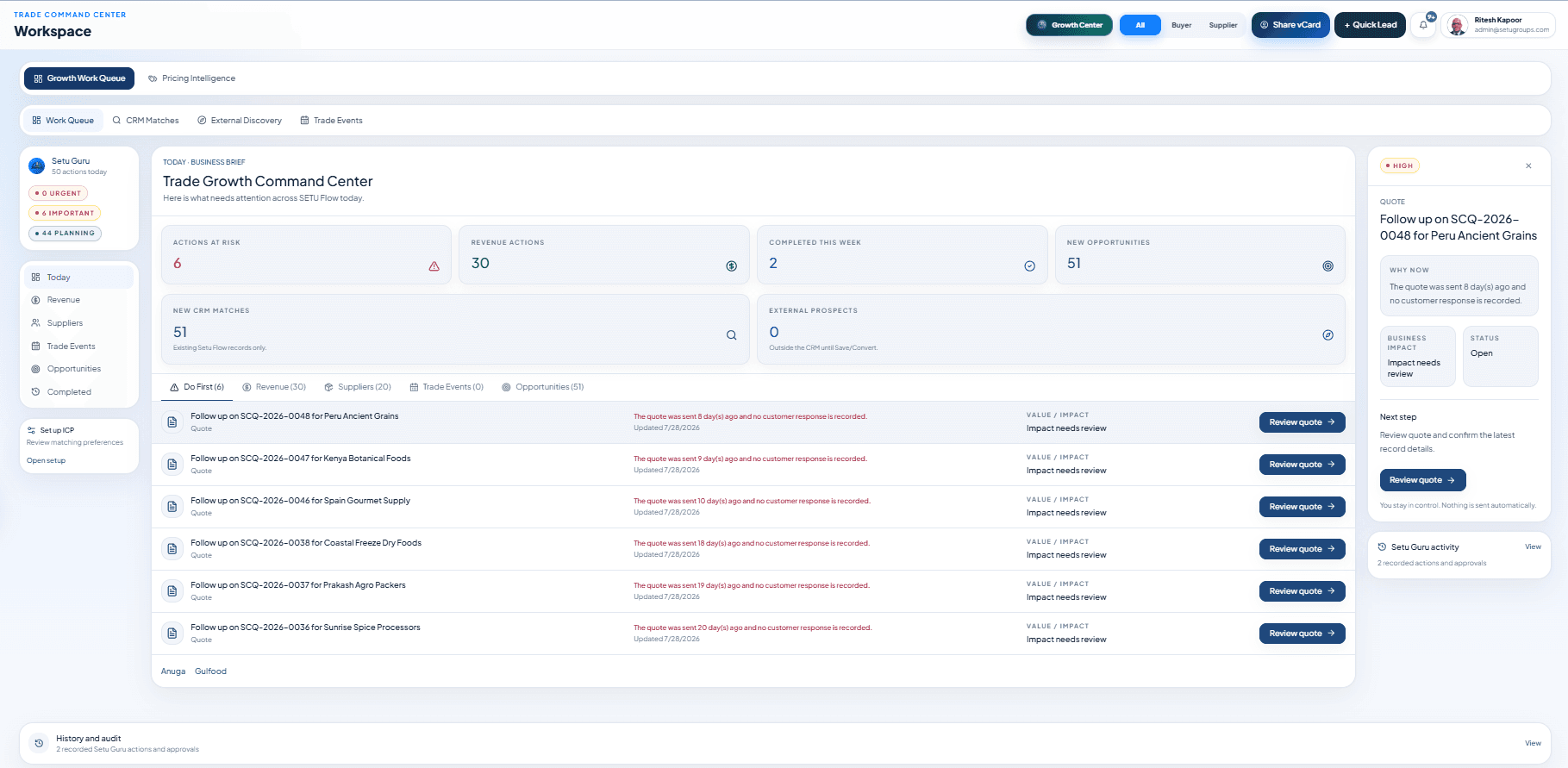
Growth Center — ICP, CRM matches, external discovery and revenue actions
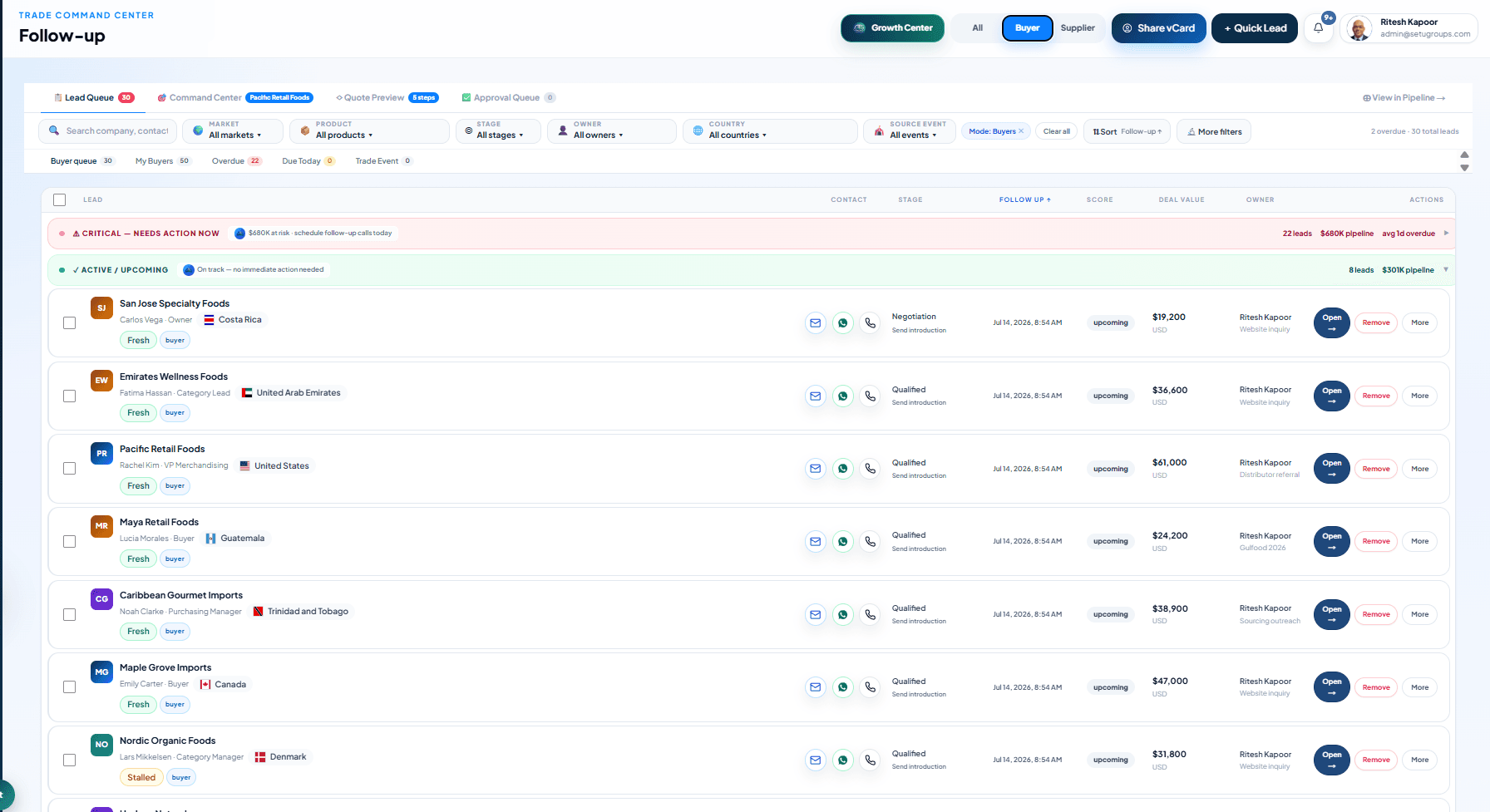
Relationship workspace — qualification, ownership, next action and quote progress
2. Trade CRM
Turn every buyer and supplier into a working relationship.
The relationship workspace combines qualification, follow-up, communication history, requirements and quote progress so the team works from the next action rather than a static contact record.
- Buyer and supplier context can be viewed without creating separate systems.
- Follow-ups, tasks, notes and communications remain attached to the relationship.
- Leadership can see stalled work, overdue actions and active commercial value.
3. Commercial Operations
Control pricing, terms and approvals before anything leaves the business.
Setu Flow keeps product selection, price lists, currencies, Incoterms, quote versions, validity and approval posture inside one controlled commercial workflow.
- Start from governed product and pricing sources.
- Keep buyer requirements, quotation versions and negotiation history connected.
- Move to sending only after the configured approval gates are satisfied.
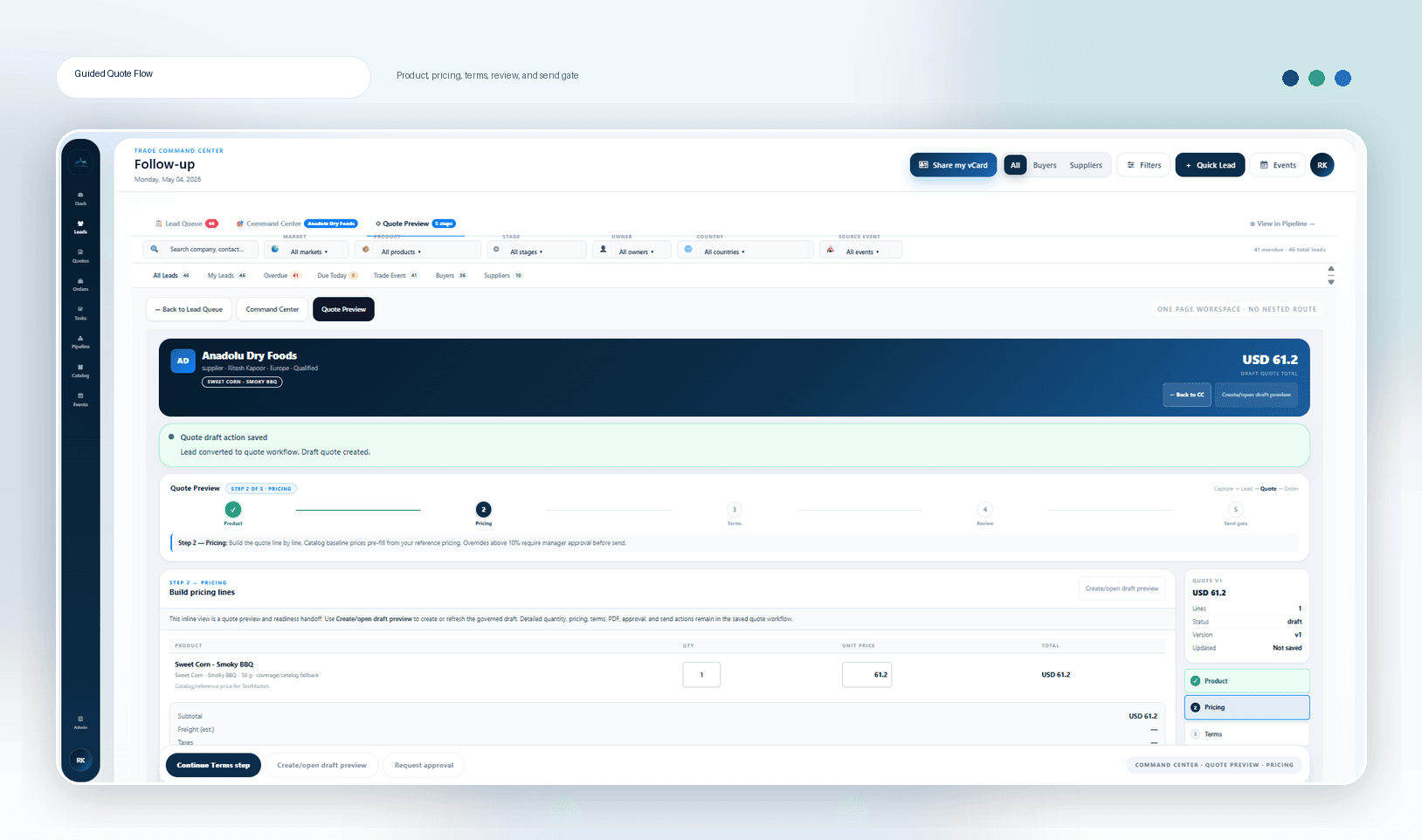
Commercial workspace — products, terms, pricing, versions and approvals
4. Trade Execution
The workflow continues after the quote is accepted.
Documents, orders, fulfilment status, payment visibility and dispatch readiness remain connected to the accepted commercial record.
- Required and missing documents surface before they block the order.
- Approved quotations become execution records without rebuilding the commercial details.
- Operations and leadership see the same blockers, evidence and next actions.
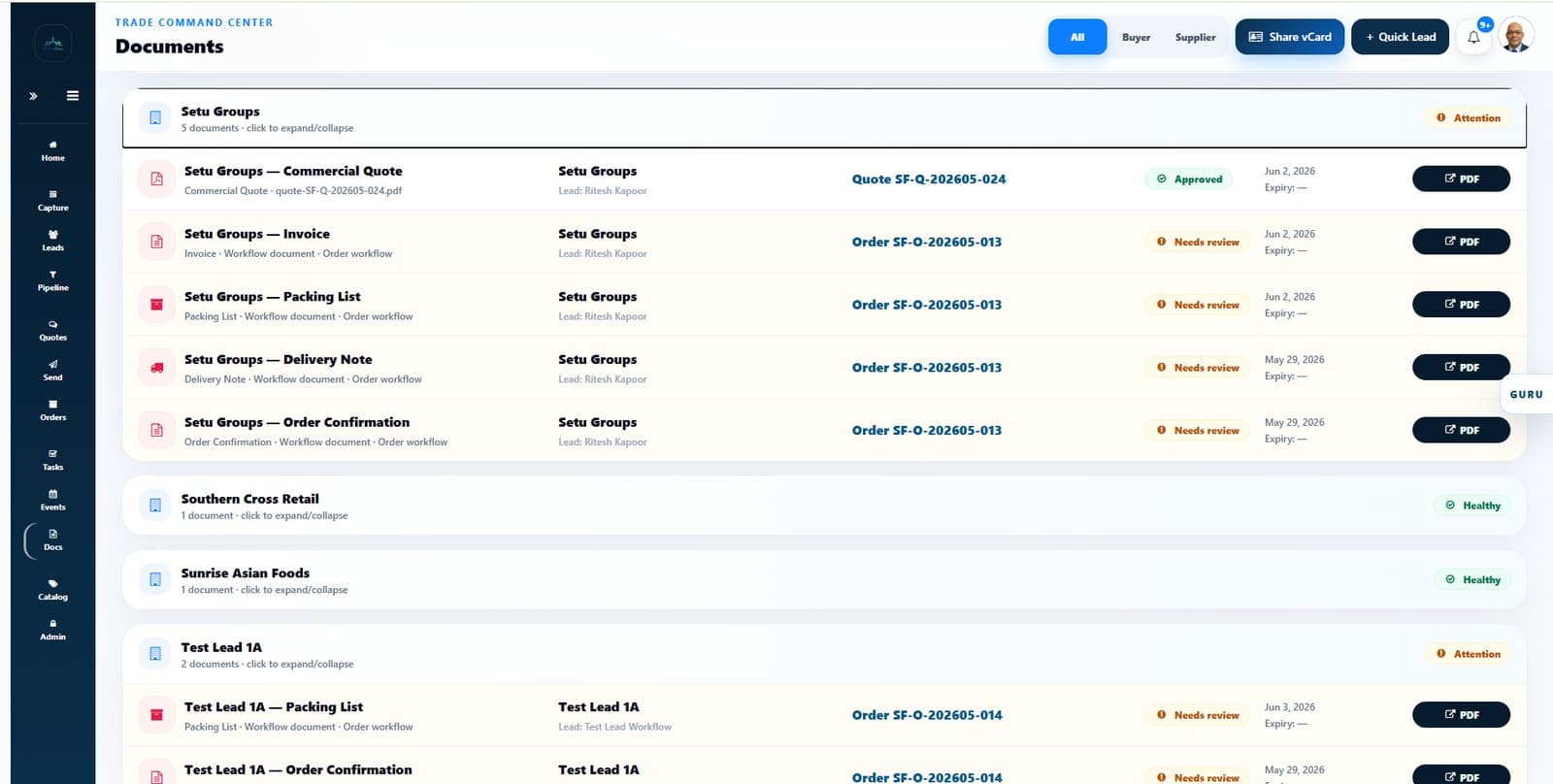
Document readiness
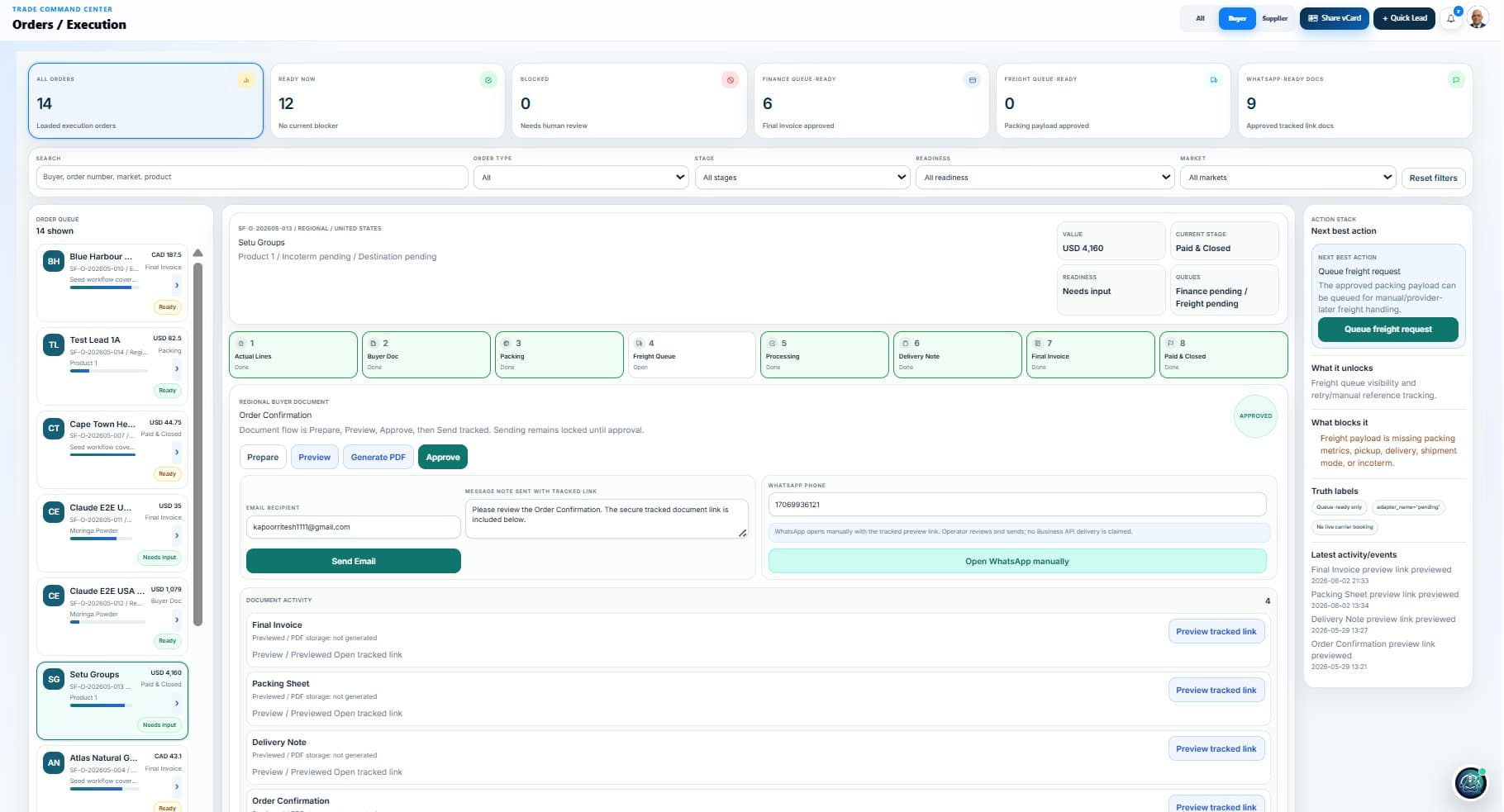
Order execution

Setu Guru
Contextual intelligence, inside the workflow.
Three blockers found
- • Packing List has not been uploaded.
- • Payment request has not been recorded.
- • Dispatch readiness still needs operations review.
5. Intelligence & Control
Know what is happening, why it matters and what should happen next.
Setu Guru, analytics, reports, alerts and audit history turn the operating record into guidance for users and visibility for leadership.
Setu Guru
Drafts, explains, recommends and flags risk with operator approval.
Analytics
Conversion, cycle time, market and execution performance.
Alerts
Overdue follow-ups, approval blockers, document gaps and order risk.
Audit history
Actions, decisions and evidence remain explainable.
Product walkthrough
See the platform mapped to your actual trade workflow.
Bring your current process from opportunity through dispatch. We will show where Setu Flow replaces re-entry, disconnected tools and unclear ownership.